Wednesday, December 13, 2017

Mod 16

1. What were you expectations for this course and where they met?

 My expeactations for this class was to learn about art as a whole and throughout the course between the visits and the online work, I believe that I did dramatically increase my knowledge on what art is.
2. Now that you've been through this course, What is art? How would you define it now compared to your intial posting?

Art to me is a lot of things, I think the biggest impact is that it is so braod that you can be very creative with it, compared to my initial posting, art now in my mind is much more understood when it comes to all the different types of areas that art can belong to. 
3. Who was your favorite artist in your original posting and who is your favorite visual artist now? If there is a difference, why do you think so? If you have the same favorite artist, why do you think so?

My initial posting my favorite artist was Van Gogh and after the semester it hasnt changed. I think now I just have a better understanding of what he did and how we created his pieces compared to when I first started. 
4. Now that you've completed this course, how do you feel about taking an online course? Is your answer the same as it was in your first posting? How is it the same or different?

I liked taking and online course in th beginning and I still like it now. I believe that having the freedom to finish a class generally at my own pace and learning about what the course has to offer in my own way makes things easier to understand. 

Saturday, December 9, 2017

Extra Credit

1. Which assignment did you ENJOY working on the best? Why?
My favorite assignment this year was the one with creating our own exhibit because I found an exhibit I absolutely loved and it allowed me to be creative to my fullest extent!
2. Which assignment did you ENJOY working on the least? Why?

The assignment I enjoyed the least was project two and responding to art work. I didn't like the fact I had to try to come up with responses to art work if I didn't connect with it. It made the assignment harder because I was limited. 
3. How did you like using BLACKBOARD?

I think the way you had balckboard set up worked well, I didn't have many problems after I learned the way you like to present the assignments. 

4. What is your opinion of the Discussion Groups in this course?

To be brutally honest, in the nicest way possible... I hated the discussion groups, I think at the time the work load in the modules was a lot then on top of that, having to do the discussion groups gave even more work on top of the load we all have with other classes. 

5. Did you participate in any of the extra credit projects in previous modules? If so, what was your opinion of them? (mandala, elgin marbles, culture, art critics)

I did not participate in any previous extra credit projects. 

6. If you had the opportunity to change this course:

What would you keep?: Exhibit project
What would you remove?: Discussion groups and required videos to watch
What would you add? : More art/drawing

7. Would you recommend this course to your peers? Yes, absolutely.

8. Please list any other comments you would like to share. 

I would like to say thank you for being very flexible when it came to extensions and caring about the well being of your students. Not many teachers are like that and I truly appreciated you working with me throughout the year!

Self Portrait.

Original Photo:

Drawing: 


Create a reflection journal on your Blog and answer the following questions:

Gallery: Exploring self Portrait. 
Inspiration pictures:

1.)File:Rembrandt Harmensz. van Rijn - Selfportrait - Google Art Project.jpg
Name: Rembrandt
Title: Self portrait
Media: Oil on Copper
Size: 12.2x15.5 cm 
Year: 1630

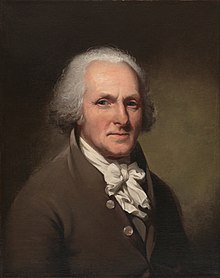
2.)Image result for Charles Willson Peale Self-Portrait
Name: Charles Willson Peale
Title: Charles Willson Peale Self-Portrait
Media: Oil on Canvas 
Size: w721 x h848 x d73 cm (Frame)
Year: 1791

3.)Image result for van gogh self portrait
Name: Vincent Van Gogh
Title: Self-Portrait
Media: Oil on Canvas 
Size: w438.2 x h571.5 cm (overall)
Year: 1889
(I included this one because it is one of the most recognized self portraits in history and I love his work.)

1. Why did you select the inspiration pieces?


The reason I chose these pictures is because when I read this assignment I can think of two things, and its the old pictures of people of significance, where they would sit there and there is not much too them, nothing in the background and you can usually see no facial expression or it is a calm look and also the famous pictures that artists would draw to describe their feelings of the time, but all of these usually never have much expression so that is what I decided to run with. 

2. Why did you select the media to create your self-portrait?


I chose a soft charcoal pencil because it is the easiest media for me to manipulate when it comes to scale, it can also be erased or if you make a mistake it can be fixed. To me it made the most sense and is the safest to use when creating something so specific. 

3. What challenges did you face in creating your self-portrait and how did you overcome them?


The biggest challenge was simply drawing myself and getting the features to look the best I can because it is myself I didn't see myself as what I was drawing and I actually over came this by getting opinions on how to draw a face from youtube videos and followed the the best of my ability. 

4. How does this piece represent you?


This piece represents me because it's simple. I knew doing something crazy wouldn't be me or my style of art. I wanted to show the simplicity of the human face in my drawing because I don't have emotional ties in my life that would sway that. I wanted to draw just my face because to sweater I have on or the background hold no value to the project so I did the best I can to show  you this through the drawing. 

5. What elements and principles of art did you apply in this work?


The biggest element that I tried to apply, is value. The way that face looks in the real photo you can see light hit from the left and it made me think to try and apply value for that reason, to show the different lighting that is on my face. In my photo I did the darker scale on the left so when I send it in it looks like the lighter scale is how it is supposed to be. 

6. Did you enjoy working on this project?


This project was frustrating because I couldn't get it to look like I wanted but I think it is the best I can do. 

7. What do you think of your final artwork?


I think the final artwork shows the best of my abilities, I spent a long time on it trying to make it the best I can so I am proud/happy with what I have, just hopefully more practice in the future will get it to where I would like it to be. 

Art Analysis Project

1. Use the vocabulary you have learned in class to describe this artwork or performance in detail.
In the piece you seen different scale values in the faces that were present. Some are bigger in size and others are smaller, this is most seen between the faces and the animal heads. This piece also has extreme uses of value in the black and white scale. You can see throughout the entire piece there is spots of white that are of objects in the foreground like the faces to completely black in the background with what looks like the cabinet. 
2. What processes were used to create this work? What social influences might the artist be responding to and why? 
Picasso discarded color to intensify drama in this piece. The social influence that Picasso was responding to was that of the Nazis casually bombing Guernica during the Spanish Civil War, to show the tragedies of war and the suffering upon civilian individuals. 
3. What is the relationship of this work to the time and society in which it was created? Describe the symbols used to express this relationship.
The relationship this work brought is that after it was finished it was toured around the world and it brought recognition to what was happening during the Spanish Civil War. He used symbols of the bull and the horse. Picasso stated the the bull was used for brutality and darkness where the horse was the people on Guernica. (Both major symbols in Spanish culture)
4. Identify elements in the work that evoke a persuasive or emotional response. Be specific about what those responses are and why.
For me the biggest emotional response was the human faces that looked extremely in distraught. When I first was the piece I could immediately feel the sadness of the work that he was trying to portray. The faces all had different expressions but also with the same feeling. Sad, agony, nothingness, and pain is what I saw in this piece from those faces.  
5. Evaluate what you perceive to be the strengths and weaknesses of the work.  Apply discipline specific vocabulary and concepts when describing your point of view.
I think the strength of this piece is the message he was trying to send when painting it, very well done when it comes to the value scale to show the darkness of the piece and the emphasis on the most important pieces of it. The weakness I perceive from this work is the shape or form of the pieces, I don't like how certain parts are very un-aligned such as the bulls horns, but I also appreciate the reason as to why Picasso probably did that, trying to show he dismantling of the situation. It is hard to find weaknesses in the work of one of the greatest artists of all time!

Thursday, November 30, 2017

Art project blog review

When I was trying to think of an idea for my project I first searched though images in the gallery of ArtStor. I finally cam across the first picture in my project and thought that making a project about our four seasons would show the diversity in many different painting from differnt periods even though the four seasons are connected the same way for as long as anyone can remember. I included the two pictures that had all four seasons in them because I liked how that even in one picture these artists found a way to show the diversity in one picture. I then wanted to have a flow of the seasons so I went from winter to spring to summer to autumn. I included two pictures for each seasons and tried to show a difference and two perspectives in each picture. This process wasnt hard, rather just long to complete and find the right pictures to use. The most challenging part was trying to figure out how to use ArtStor and fins images, but once I did that I was able to get through it.

Tuesday, November 28, 2017

Mod 13/14 video questions.

The first videos proxy kept showing that the link was broken so I was not able to access the video and the second video the account has been deleted so I was also not able to watch that one either and I have not recieved a response on what to do so I will be going on with just the 3rd video as information for this grade. 
1. For each video list/discuss the key concepts you learned.
- Montebello was the one that curated the museum.
- His creativity is what put together over the 2 million objects into the museums collection. 
- Although he did not like some things he remained professional and saw the greatness in art pieces, where he decided to respect them and put them into the museum. 
- The director is what starts the process of the getting a piece into the museum. 
2. Do the videos relate to the creation of your Art Exhibition project? If yes, explain how. If no, explain why not.
This video perfectly describes what we are doing but on a much bigger scale. He does the entire museum, we are simply putting together a power point. His museum has many themes but we are focusing on one theme, so in a way we are both doing the same thing but on different scales. 
3. What is your opinion of the films? Do they add depth to understanding of the art concepts you practiced while creating your curation project?
I liked this video because he shows us what his process was to being a curator and what he thinks when he is picking works of art that will go into the museum. It did help my process because it made me think of the quality of each picture that I chose to go into my project. 

Friday, November 17, 2017

mod 12

1. Explain why you selected each of the TWO videos you choose from the selection listed above.

 The reason selected the two videos I did was because of I wanted to learn more about photography and those two videos seemed to have a gear towards that part of art and would be able to provide me the most information.
2. For each video list/discuss the key concepts you learned.

-Transfering an image to a silk screen, it needs to be enlarged several times.
- An extreme light is pointed towards the screen and through the process ink is poured on the screen that is squeezed through and makes the image.
-Warhol was obsessed by the celebrities. He seemed to also take photos of head shots.
Liz picture became extremely famous.

+Hockney used "drawing with a camera" because he wasnt sure where he wanted the end of the picture.
+Polaroid "joiners" were pieced together to expand the medium of the picture.
+Excersised the idea of a picture within a picture.
3. How do the videos relate to the readings in the text?

In the book it had a specific page on 508 about Warhol that emphasized the influence that Warhol had on art. The video showed this as well and talked about what he did with his photography and portraits, and one of his famous ones of Liz.

Hackney embraced the space in his pictures that was different during that time. Both of these photographers had major influences during this time on the way people looked at their portraits. 
3. What is your opinion of the films? How do they add depth to understanding of the readings and art concepts?

The films this time, I enjoyed because they had a lot of talking about what specific photography aspects were being examined, but the reading was hard to understand because I couldn't find much on Hackney and it was hard to compare and build the two off of each other.